What Does ICL Mean in Text? The Real Slang Meaning
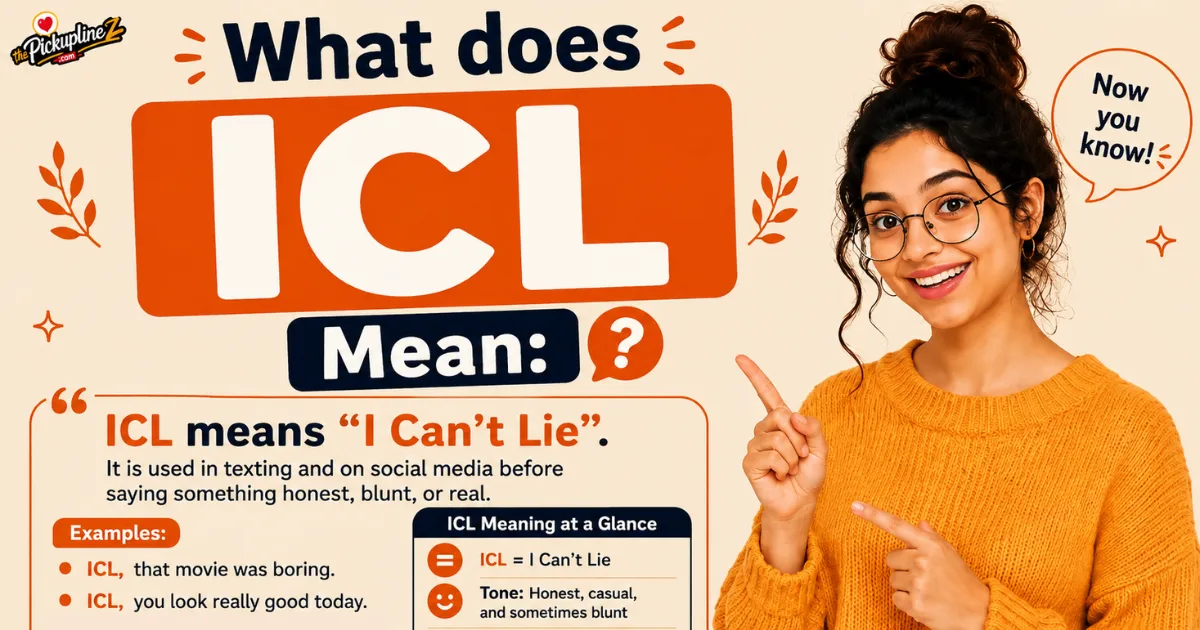
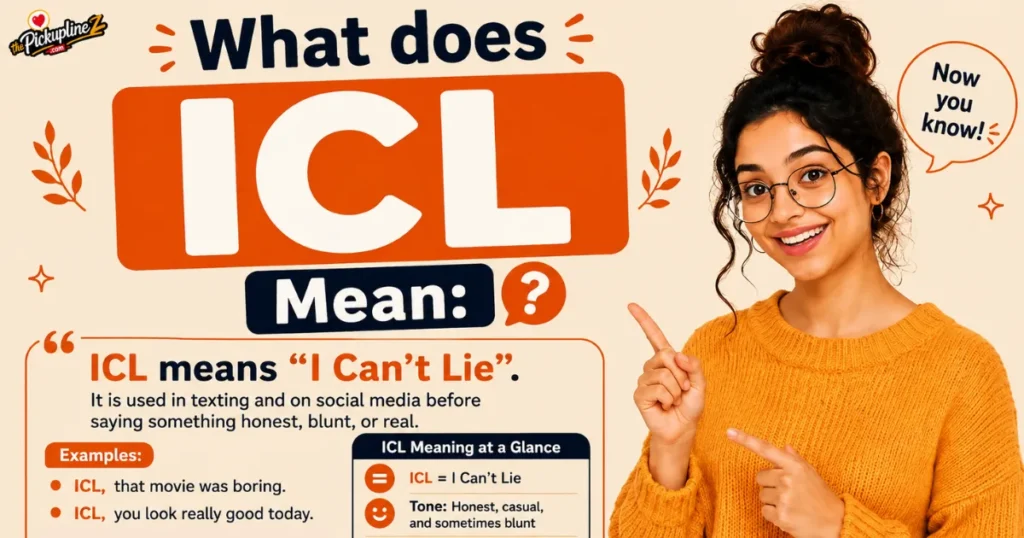
ICL is an Internet acronym growing fast in popularity among Gen Z. Simply put, ICL means “I can’t lie” in casual texts, social media posts, and memes. It serves as a quick honesty signal, sort of a modern, informal “to be honest” or “TBH”. In the U.S., you’ll spot ICL popping up in TikTok comments, Instagram captions, Snapchat chats, and friendly group messages. For someone reading a slangy text or meme, discovering that ICL literally stands for “I can’t lie” immediately clears up confusion. As a language-savvy writer, I’ve seen acronyms like ICL bring emotion and authenticity into teen conversations. This guide will explain the ICL meaning, origin, and usage in everyday chats, so you won’t miss a beat when friends use it to keep things real.
People often stumble over new texting slang. You might feel left out when your nephew or teenager uses “ICL” online. I understand that puzzled feeling. Rest assured, by the end of this article you’ll confidently know that ICL = “I can’t lie.” Not only that, but you’ll learn how and when it’s used in context. We’ll cover examples from TikTok to group texts and compare ICL to similar acronyms. Think of it as a friendly lesson in keeping it honest. I promise it’s easier than it looks.
What does ICL mean in texting?
On messaging apps and social media chats, ICL almost always stands for “I can’t lie.” It’s an acronym teens use to start a sentence that’s about to be really candid or heartfelt. For example, someone might write, “ICL, this game was funnier than I expected.” In that context, they’re essentially saying, “To be honest, that game was really funny.” Using ICL signals sincerity or a personal confession. It’s a quick shortcut that adds emotional weight: instead of typing a full phrase like “I have to admit,” you just use ICL.
Because ICL is informal, it shows up in casual texting slang, especially among younger people. You’ll often see it in group chats, one-on-one messages, or social media comments. It doesn’t work for formal writing or serious settings, but in casual conversation it helps convey trust and authenticity. In summary, when someone types ICL in a text or social post, they’re literally prepending “I can’t lie.” It’s a compact way to say “I’m telling the truth here” without extra words.
How is ICL used in text messages?
In practice, ICL often appears at the beginning of a text message. For example:
- “ICL, I didn’t study for the test.” (Here the speaker is admitting something bluntly.)
- “Wow, ICL you have a talent for art!” (They’re complimenting a friend honestly.)
Because texting is fast, people prefer the three letters of ICL over the full phrase. In each of those messages, the rest of the sentence is a straightforward statement, but starting with ICL tells the reader to brace for candor. It’s like an honesty flag: recipients immediately know that what follows is not embellished. Teenagers and young adults especially use ICL this way on phones and chat apps. The social media platforms are full of examples: TikTok comments, Twitter/X threads, Instagram DMs anytime someone wants to emphasize honesty, they drop “ICL” at the front.
Importantly, ICL doesn’t change the meaning of your sentence; it changes the tone. It makes a sentence sound more sincere. Using ICL conveys that you’re being direct. This fits the style of many online conversations, where brevity is key. Rather than saying “To be honest, that concert was amazing,” you simply write, “ICL, that concert was amazing.” Both mean nearly the same thing, but ICL is cooler and quicker.
ICL Meaning on Social Media
Although ICL started in texting, it’s now common on social platforms like TikTok, Snapchat, Instagram, X (Twitter), and chat apps like WhatsApp or Discord. In fact, SmartGrammer’s table of common platforms lists TikTok, Snapchat, Instagram, WhatsApp,Reddits, X, and Discord as places ICL shows up. On TikTok and Instagram, creators use “ICL” in video captions and comments to emphasize realness. For example, a TikTok caption might read “ICL this dance is lit,” meaning “Honestly, this dance is amazing.” Likewise, on Instagram Stories or Snapchat DMs, someone might add “ICL” to underline sincerity.
Using ICL on social media signals you’re being authentic online. It’s just as valid whether you’re texting a friend or tweeting a thought. The key is tone: on Instagram or Snapchat, ICL tends to carry the same “I can’t lie” meaning. One source notes that ICL is often a marker at the start or end of a sentence to signal honesty. So whenever you scroll past a post or chat and see ICL, remember it’s a quick honesty cue used across platforms.
ICL vs TBH vs No Cap vs FR
ICL joins a family of similar acronyms used for frankness in online chats. For instance, “TBH” (to be honest) and “NGL” (not gonna lie) are near-synonyms. The difference: TBH and NGL have been around longer, while ICL feels a bit fresher and more personal. People often choose ICL when they want extra emphasis or a slightly more dramatic tone than TBH.
Other related slang: “No cap” means “no lie” or “seriously,” and “FR” (for real) does something similar. All of these acronyms signal honesty. Compared to them, ICL can feel more emotional. For example, saying “ICL, that movie gave me chills” feels a bit more conversational than “No cap, that movie gave me chills.” CreativeSimiles notes that ICL is part of an “authenticity” set of slang words. Essentially, whether it’s TBH, NGL, or ICL, the core intent is the same: to prepare the listener for a truthful statement.
Similar Slang Words Like ICL
Aside from TBH, NGL, and No Cap, there are a few more informal phrases that overlap with ICL’s vibe. Examples include:
- Real talk – used before a serious point.
- For real (FR) – emphasizes truth.
- Honestly – spelled out honesty (less slangy).
- Straight up – very direct truth.
These aren’t acronyms, but they’re casual honesty markers like ICL. For instance, a person might say “Straight up, I didn’t enjoy that” or “Real talk, that was my favorite song” in a text. Compared to ICL, they’re longer, but serve the same purpose: keeping it real. When choosing which to use, remember ICL is shorter and trendier, suited for quick texts. The spirit of all these phrases is the same: share your true feelings directly.
Where Did ICL Slang Come From?
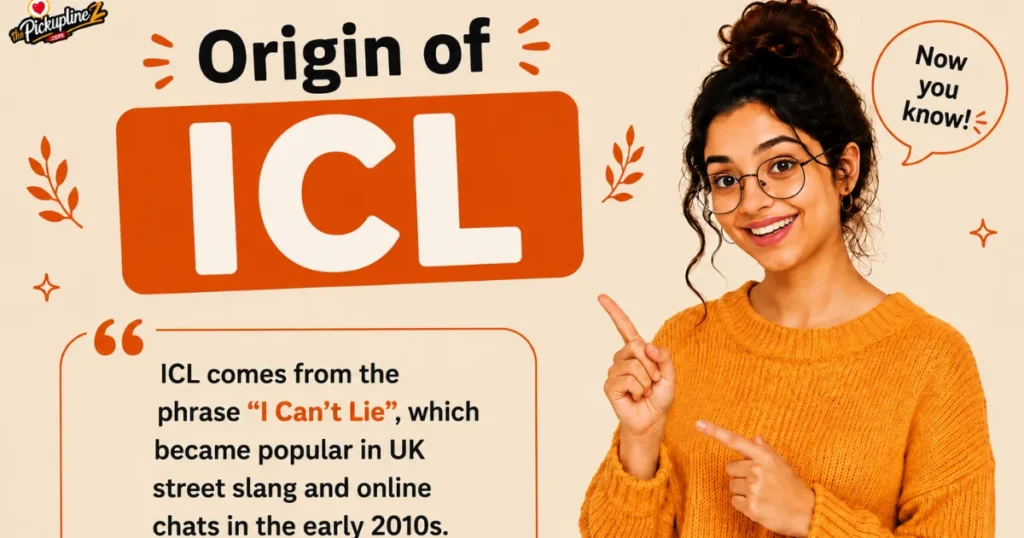
ICL’s rise traces back to early 2020s social media. The phrase “I can’t lie” was already spoken by lots of people, but someone turned it into the abbreviation “ICL” to fit the fast pace of texting. It “emerged from Gen Z’s need for faster, authentic online communication,” says CreativeSimiles. In other words, Gen Z users wanted a quick way to emphasize honesty without typing a full sentence.
The term spread on platforms like TikTok, Twitter/X, and Snapchat. Many viral TikTok videos around 2021 popularized ICL, and it caught on among young users globally. Once teens started using it in captions or memes, others copied it. Now by 2026, it’s a well-known piece of teen slang in the USA. It’s one of several internet acronyms that gained traction (similar to how “NGL” was huge a few years ago). In short, ICL came from social media culture and “got stuck” as a trending acronym that Gen Z uses daily.
ICL Full Form and Real Meaning
Everywhere, ICL’s “full form” is simply “I can’t lie.” You won’t find a more complicated official meaning in slang. The full phrase expresses honesty or transparency in casual speech. In texting, ICL is essentially the same as saying “I can’t lie, [what follows is true].” It’s that straightforward. Think of it as adding “to be honest…” before a statement, but in acronym form.
Because “ICL” fully encapsulates the phrase, you get the meaning instantly. If you see ICL in a message, you don’t need to guess a secret – it’s right there in the first letters. This is why ICL feels intuitive once you know it. As CreativeSimiles writes, it’s like saying “I’m keeping it 100% authentic” in a very casual way.
ICL Meaning in Daily Conversation
In everyday chats, ICL has become a normal part of speaking (especially among teens). You’ll hear it when friends talk about anything from movies to school. For example: “ICL, that pizza is delicious” – meaning “Honestly, this pizza is delicious.” It pops up naturally when people text confessions, true opinions, or compliments. Using ICL in daily talk shows comfort with being vulnerable and sincere.
This slang is handy because it packs an honest reaction into just three letters. It resonates in group chats where brevity matters. For example, after a friend shares news, someone might reply, “ICL I’m so happy for you.” The listener knows that statement is genuine. In sum, ICL in normal conversation keeps messages feeling “genuine and relatable,” as CreativeSimiles describes. It’s a casual shorthand for honesty you’d hear on Snapchat, Instagram DMs, or any chat.
Real Examples of ICL in Chat
Seeing ICL in action makes it clearer. Here are a few real-style examples (ICL is in bold):
- Friend: “Did you love the movie?”
You: “ICL, it was the best I’ve seen this year.” - Friend: “Is the concert worth going to?”
You: “ICL, you won’t regret it.” - Person: “I messed up on the test.”
You: “ICL, that happens to everyone.” - Team Chat: “How was the game?”
You: “ICL, we deserved the win.” - Sibling: “This dessert is amazing.”
You: “ICL, it’s so good.”
In each example, ICL at the start flags that what comes next is an honest opinion or comforting truth. It adds a casual, friendly tone. Readers instantly get that the speaker is being 100% real.
When You Should and Shouldn’t Use ICL
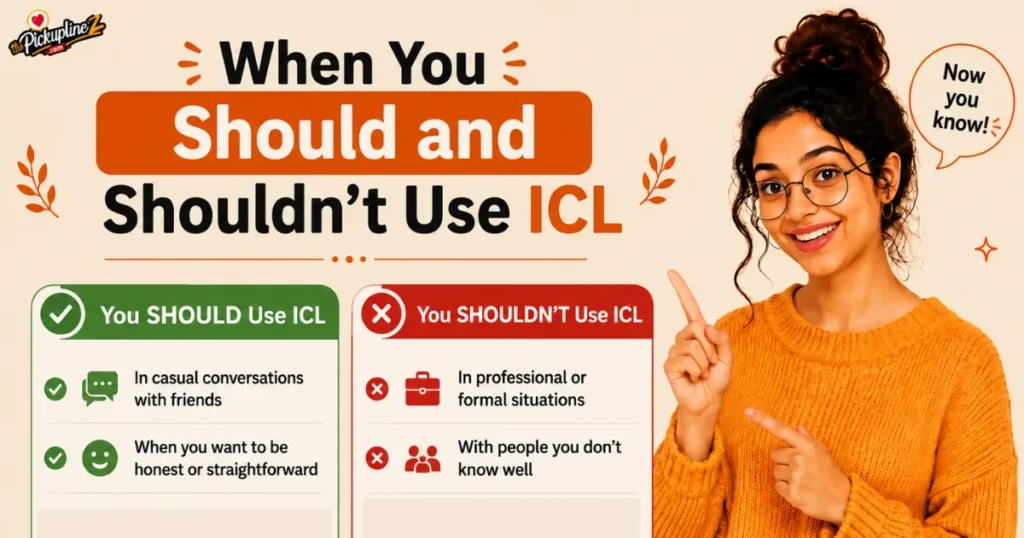
ICL is great for personal, informal contexts, but not for everything. You should use ICL when chatting with friends or on social apps, especially if the goal is to be relatable. It works when sharing honest feedback, funny confessions, or emotional reactions in a relaxed setting.
Avoid ICL in formal or sensitive situations. Do not use it in emails, job interviews, or with people who might not know the slang. In professional writing, say “to be honest” or “frankly” instead. Also be cautious: saying “ICL” about a serious matter (like criticizing someone harshly) can sound blunt. In short, if you know your audience and it’s a casual chat, ICL is fine. If not, leave it out.
Quick Tips for Remembering ICL Meaning
- Think of it as “100% honesty.” Every time you see ICL, replace it in your head with “I can’t lie.” You’ll remember that it signals truthfulness.
- Context clues: If someone starts a message with ICL or just before a sentence, assume it means they want to sound very candid.
- Usage rule: It’s almost always the honesty meaning in casual chat. Only in rare, joke contexts (or spam accounts) might it mean “I chuckled lightly,” but that’s uncommon.
- Acronym family: Link it mentally with similar slang like NGL/TBH. If you know those, you know ICL’s vibe (just replace “not gonna lie” with “I can’t lie”).
- Practice: Next time you text, try using ICL naturally. Seeing it in real messages will reinforce its meaning.
These tips will help the acronym stick: ICL means “I can’t lie,” so it’s an honesty marker. Use it appropriately and it’ll make your chats feel authentic.
Does ICL Mean the Same Thing Everywhere?
In casual chat and social media, ICL consistently means “I can’t lie.” The meaning doesn’t really change across the platforms where Gen Z hangs out. Whether on TikTok, Snapchat, Instagram, or a text message, the core idea is honesty. The difference is only slight: occasionally a niche meme or spam account might twist it for humor (like “I chuckled lightly” on some Instagram posts), but that’s very rare.
So in almost all everyday use, you can assume ICL means the same thing: “I can’t lie.” The surrounding context decides if it’s serious or casual, but the base meaning is steady. As SmartGrammer explains, outside of slang and social apps, ICL often means other things (like a college name or an eye lens). But in teen texting culture, it stays an honesty marker. Just remember: if it looks like someone’s about to speak their mind, and they write ICL, it’s the real deal. What follows is genuine truth.
FAQ Section
What does ICL mean in slang?
ICL in slang is short for “I can’t lie.” It’s an abbreviation people use online or in texts to show they’re about to say something honest or heartfelt. It’s a casual way to signal truth without typing a full sentence.
What does ICL mean on TikTok?
On TikTok, ICL still means “I can’t lie.” Creators use it in video captions or comments to introduce a candid opinion or reaction. For example, a TikTok caption might say, “ICL this trick actually works!” meaning “Honestly, this trick works.”
What does ICL mean on Snapchat?
Similarly, on Snapchat (DMs or stories), ICL means “I can’t lie”. It’s used to emphasize sincerity. One source notes that Snapchat usage mirrors texting: people send snaps with captions like “ICL, that outfit is fire,” which means “I have to be honest, your outfit looks great.”
Is ICL a rude acronym?
No, ICL itself isn’t rude or offensive. It’s just a way to say “to be honest” in slang. It can sound blunt only if what follows is harsh. The abbreviation is neutral; tone comes from context. In general, using ICL is friendly and not meant to insult.
They are very similar. All mean you’re being honest. ICL = “I can’t lie,” TBH = “to be honest,” NGL = “not gonna lie.” The nuance: ICL feels a bit more personal or emotional in group chats, while TBH might be a bit more formal and NGL has been around longer. But in practice, friends often use them interchangeably to preface truthful comments.